- The Historic Summit Landing: When the Impossible Became Possible
- What are the reasons helicopters cannot frequently fly to the top of Everest?
- Can helicopters land at the base camp on Everest?
- Where Do Helicopters Really Land in the Everest Region?
- What is included in an Everest helicopter tour?
- Who Should Think About Taking an Everest Helicopter Tour?
- Safety Tips for Everest Helicopter Tours
- When is the best time for helicopter tours of Everest?
- Cost Factors
- Helicopter rescue operations on Everest
- Why should you plan your Everest trip with HeliOnCall?
- Getting Ready for Your Helicopter Ride Over Mount Everest
- Other helicopter tours are available besides Everest.
- Making Your Dream Come True
- Are you ready to see Mount Everest from the sky?
- Get in touch with HeliOnCall now
- Questions That Are Often Asked
Can helicopters go to the top of Mount Everest? Your Full Guide
Mount Everest, the tallest peak in the world, attracts climbers, tourists, and those with ambitious goals. A helicopter ride to Mt. Everest provides an advantage that is rarely offered to the general public: the ability to ascend to the top of the world in a few hours and see incredible views. A common debate is whether or not helicopters can really fly to the top of the highest peak in the world. The answer is both intriguing and challenging. Let's examine the possibilities, restrictions, and breathtaking helicopter rides available in the vicinity of Mount Everest.
The Historic Summit Landing: When the Impossible Became Possible
Yes, a helicopter has landed on the top of Mount Everest, but only once in history. A lot of people felt it was impossible, but French test pilot Didier Delsalle did it on May 14, 2005. He landed on the top of Everest at 7:08 AM NPT in a Eurocopter AS350 B3 that had been properly modified. He stayed there for only 3 minutes and 50 seconds before coming back down.
To do this amazing thing, the weather had to be excellent, with little wind and clear visibility. They also had to do a lot of testing before the trip to get ready for the tough conditions. Delsalle used a very light helicopter that had been specially made for high-altitude flying. His extraordinary talents as an experienced test pilot made the difference between success and failure. His accomplishment is still the only confirmed helicopter landing on the top of Everest, and it's unlikely to happen again for business purposes very soon.
What are the reasons helicopters cannot frequently fly to the top of Everest?
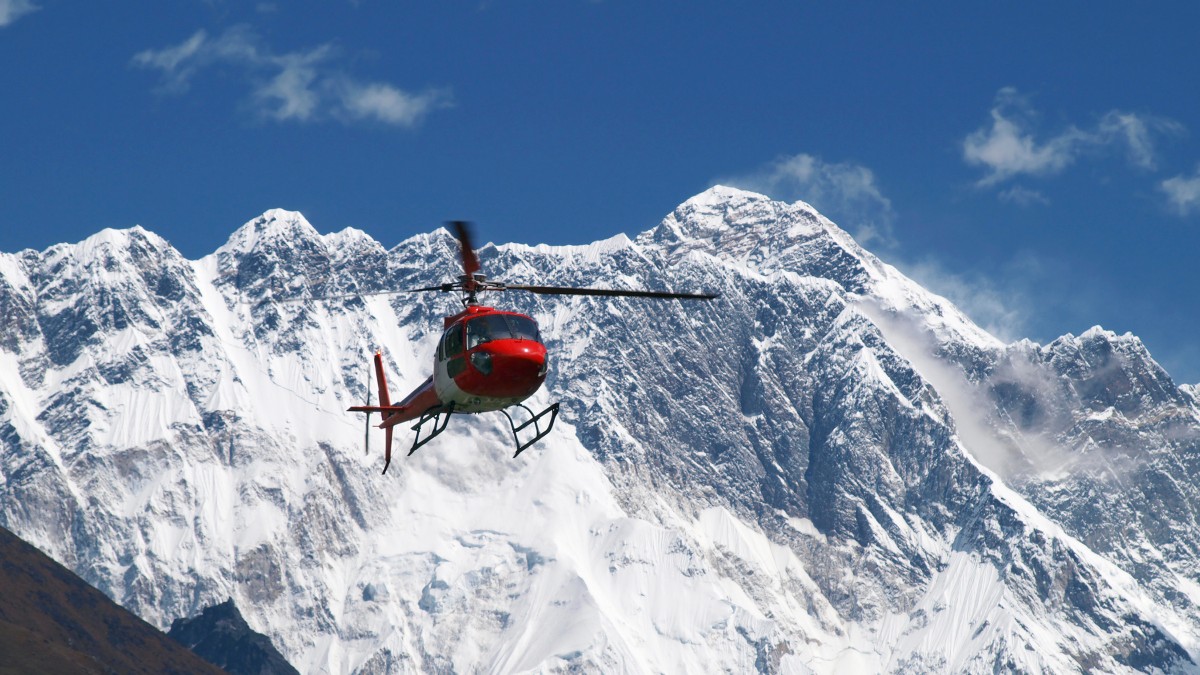
Theoretically, summit flights are feasible, but a number of significant factors make them extremely risky and nearly impossible to perform frequently. Knowing these problems helps explain why this accomplishment is so uncommon.
Very high altitude and thin air
The air is roughly one-third thicker at 8,848 meters than it is at sea level. The air at the summit of Everest is too thin for helicopter rotor blades to lift off, which requires thick air. Because the air is less dense, engines cannot produce as much power, and helicopters cannot stay in the air due to insufficient lift. Pilots struggle to maintain plane stability because flying at high altitudes is challenging.
Unpredictable and extremely bad weather
It is extremely difficult to forecast the weather in the vicinity of Everest. Even large helicopters can be tossed around like toys due to the extremely unstable air caused by wind speeds of over 160 km/h (100 mph). Pilots have little time to respond when weather conditions change rapidly, and storms and blizzards can occur without warning. Even more difficult situations arise when the temperature falls below -30°C (-22°F). Hydraulic systems can freeze, and metal components can become brittle.
Rules for the law and the environment
The government of Nepal does not allow commercial aircraft to the summit. Only in the most desperate situations are emergency rescue operations allowed. There are a lot of good things about this rule. In addition to keeping climbers safe and honoring the mountain's sacred status in local culture, it preserves the traditional mountaineering experience that has characterized Everest expeditions for generations and shields the delicate mountain environment from an excessive number of helicopters.
Technical Limitations
Even specifically designed helicopters encounter numerous technical issues at extremely high altitudes. If the fuel lines and hydraulic systems freeze solid, the plane can't be controlled. Engines can break down if they don't obtain enough oxygen, much like people need air to breathe. The mountain's top is very dangerous owing to the steep slopes and changing snow conditions; thus, there aren't many safe locations to land. The shape of the mountain can induce dangerous turbulence and downdrafts that can quickly make helicopters lose altitude or crash into the mountain.
Can helicopters land at the base camp on Everest?
Of course! Helicopter flights with landings at Everest Base Camp continue to be safe, well-liked, and conveniently accessible despite the largely closed summit. When it comes to seeing the beauty of Everest, these trips are a great substitute for traditional mountaineering, which involves weeks of hiking.
Where Do Helicopters Really Land in the Everest Region?
Everest Helicopter tours can land at several specific locations in the Everest region, each providing a unique experience and perspective. Understanding these locations enables you to appreciate the amount of planning that goes into every flight.
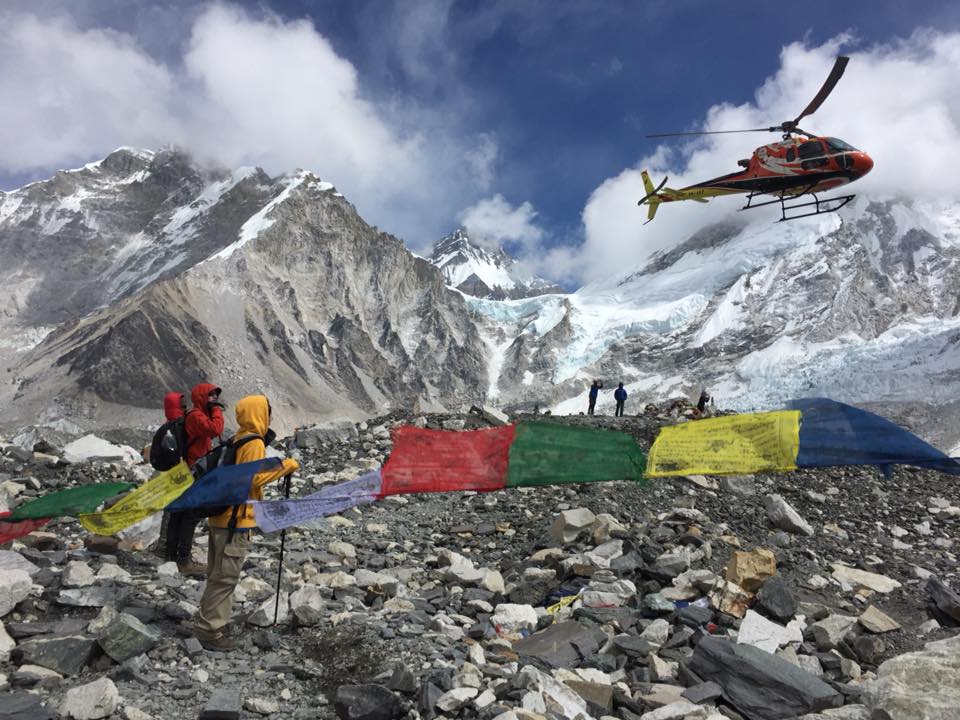
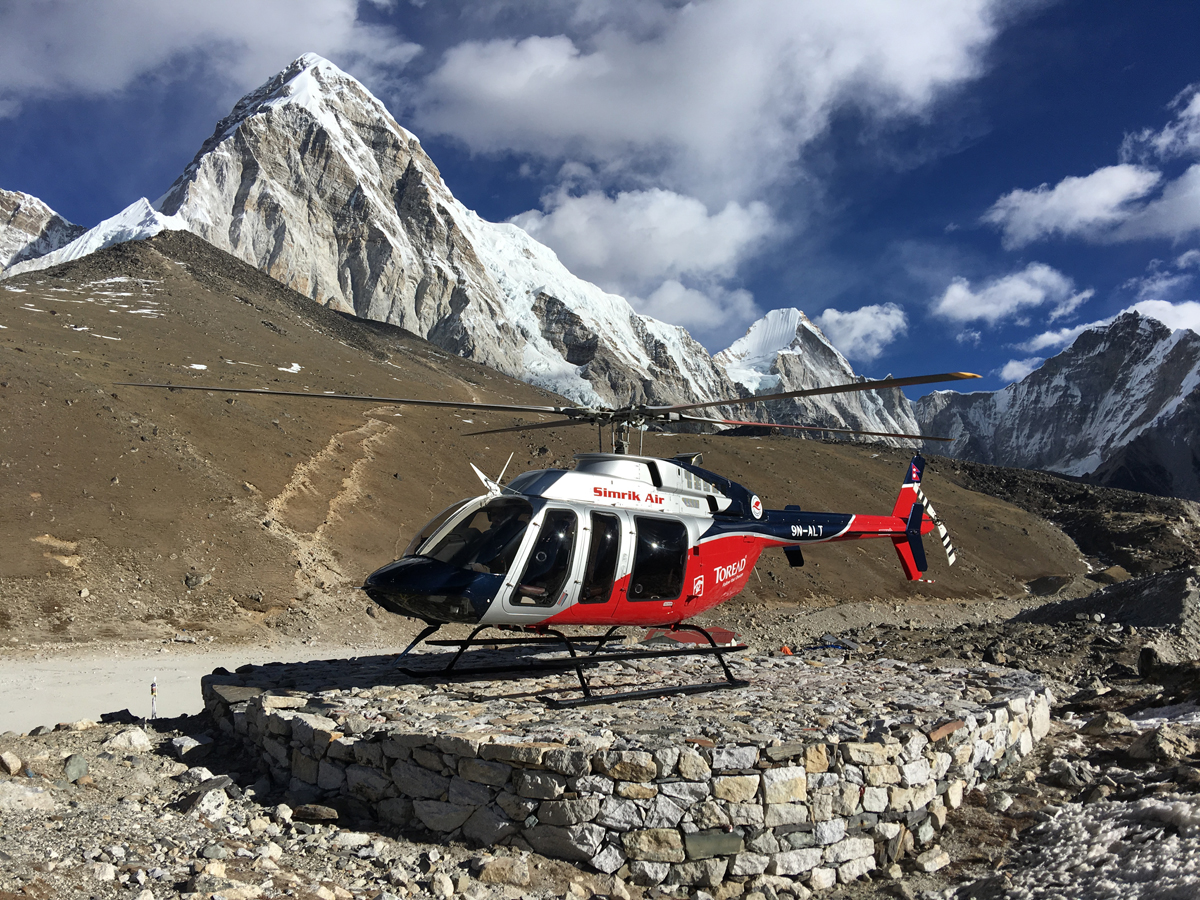
Kala Patthar is the highest point close to Everest where helicopters can land, standing at 5,545 meters (18,192 feet) above sea level. Mount Everest, Nuptse, Pumori, and other peaks are visible for miles around from this location. Due to weight and height restrictions, helicopters can only transport two or three passengers at a time to this altitude. The ten to fifteen minutes that ground time typically lasts gives passengers ample opportunity to snap photos and enjoy the breathtaking scenery before the thin air becomes difficult to breathe.
The **Everest Base Camp area** is 5,364 meters (17,598 feet) high; however, helicopters usually land in safer places nearby, like Gorakshep at 5,140 meters, instead of right at base camp. The real base camp is on glacial terrain that is always moving, so planes can't land there. There aren't many flat landing spots, and safety is a concern for both passengers and crew, so pilots choose safer options that still give them amazing views of the camp and the peaks around it.
Hotel Everest View is a beautiful place to stop for breakfast at 3,880 meters (12,730 feet) with stunning views of Mount Everest. This wonderful hotel is one of the highest-altitude lodges in the world. It has comfy rooms and hot meals. Travelers can enjoy drinks while admiring the Himalayas in this welcoming landing area with excellent amenities, which is a great place to get used to the altitude. Everyone has time to unwind and adjust to the higher altitude during the typical 30- to 60-minute halt.
Lukla, which is 2,860 meters (9,383 ft) high, is the main place where all Everest helicopter excursions stop to refuel. Because of its short, steep runway, this little mountain hamlet is home to one of the world's most dangerous airports. As the primary gateway to the Khumbu region, Lukla is frequently bustling with trekkers, mountaineers, and expedition teams preparing for their ascents.
Pheriche and Syangboche are stops for passenger shuttles that are in between flights. This is especially helpful when groups are too heavy to fly at high altitudes. These strategic spots also help with fuel management because helicopters consume fuel quickly at high altitudes and need to have some in reserve for safety.
What is included in an Everest helicopter tour?
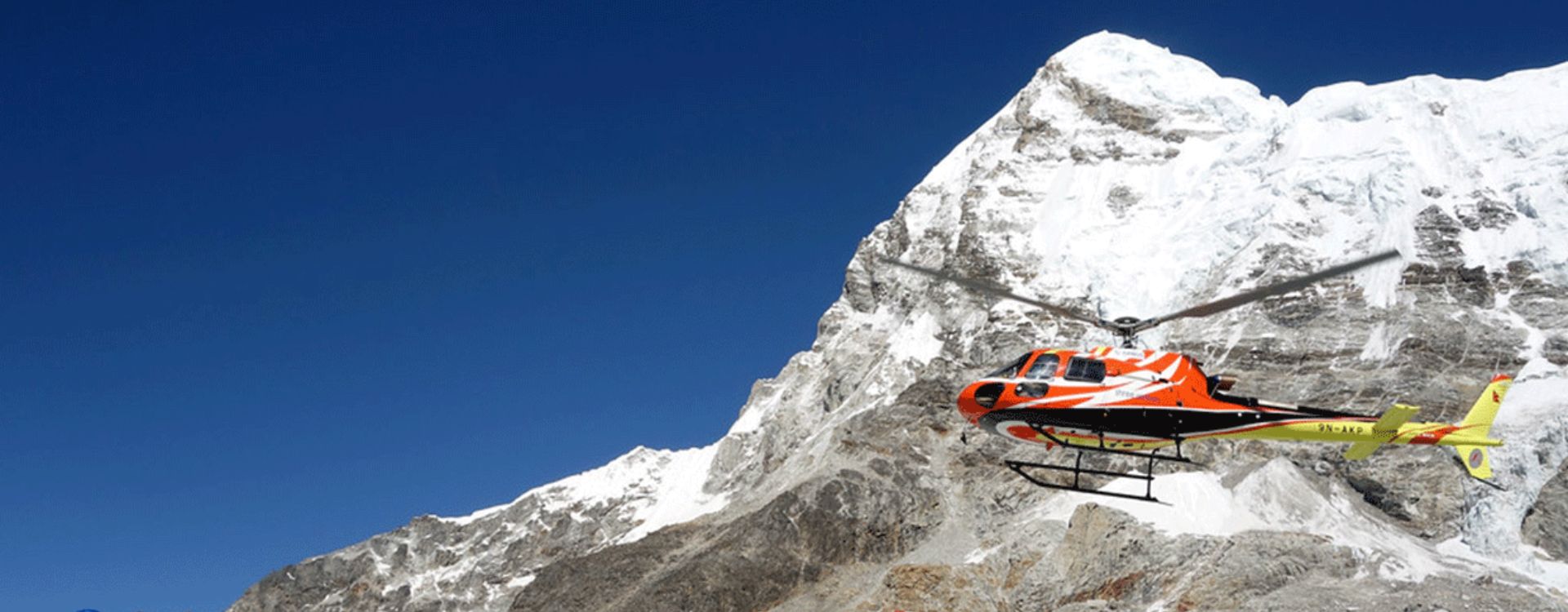
A normal Everest Base Camp Helicopter Tour lasts four to five hours and starts at Tribhuvan International Airport in Kathmandu. As you take off, the city slowly gives way to rural areas. You'll get beautiful views of Bhaktapur, Nagarkot, and the Himalayan foothills that sweep like waves toward the high peaks.
The trip goes on with a stop in Lukla to refuel. While you're there, you may witness the fascinating ballet of planes coming and going from the famed runway for 15 to 30 minutes. After getting more fuel, the helicopter flies farther into the mountains, via the Khumbu Valley, over traditional Sherpa communities where stone huts with colorful prayer flags are scattered over the terrain. Monasteries that have stood for centuries on hillsides and terraced farms carved into steep hills await you.
The best part is when you fly above Everest Base Camp itself. During climbing season, you can see the colorful tents of the teams that are climbing. The Khumbu Icefall, a huge waterfall of fractured ice that is hard for even the best climbers to climb, looks like a frozen waterfall below. Then you land at Kala Patthar or a nearby viewpoint, where you'll step out onto solid ground and be surrounded by the tallest mountains in the world. The ten to fifteen minutes on the ground feel like they will never finish and like they will never end as you take in views that few people ever see in person.
After you get back in the helicopter, you'll fly to Hotel Everest View for breakfast. You can eat hot meals and sip warm drinks while huge mountain walls rise all around you. The thirty- to sixty-minute break gives you an opportunity to recover and think about all the amazing things you've seen. Finally, the trip back to Kathmandu lets you see the countryside from a different aspect as you go down toward the valley again.
You will get amazing views of Mount Everest (8,848 meters), Lhotse (8,516 meters), which looks like Everest's sister, and Nuptse (7,861 meters), which protects the valley's western side. Ama Dablam, which is 6,812 meters high and formed like a pyramid, is known as the "Matterhorn of the Himalayas." The other three peaks in the picture are Cho Oyu (8,201 meters), Pumori (7,161 meters), and Makalu (8,485 meters). The Khumbu Glacier and Icefall are always changing in the foreground because of the changing light.
Who Should Think About Taking an Everest Helicopter Tour?
This trip is ideal for people who don't have a lot of time and can't commit to a twelve- to fourteen-day trek but still want to see Everest up close. Families with kids or older people benefit a lot from the tour because it lets people of all ages experience Everest together, which would be impossible if they were trekking. Helicopter tours are now accessible to people who previously believed they couldn't go on long hikes because of physical or health limitations.
Adventurers can see areas of the Himalayas from above that are inaccessible to trekkers on the ground. Photographers seeking unusual images can locate compositions and angles not found on typical trekking routes. People who value comfort and luxury over traditional trekking value the speed and comfort of helicopter travel. It is possible to maximize time by walking in and flying out, or vice versa, for those who wish to combine hiking with a helicopter return.
Safety Tips for Everest Helicopter Tours
Helicopter tours of Everest today have very strict safety rules since there are so many systems and procedures that operate together. People who know these safety tips will have a better time on their trip.
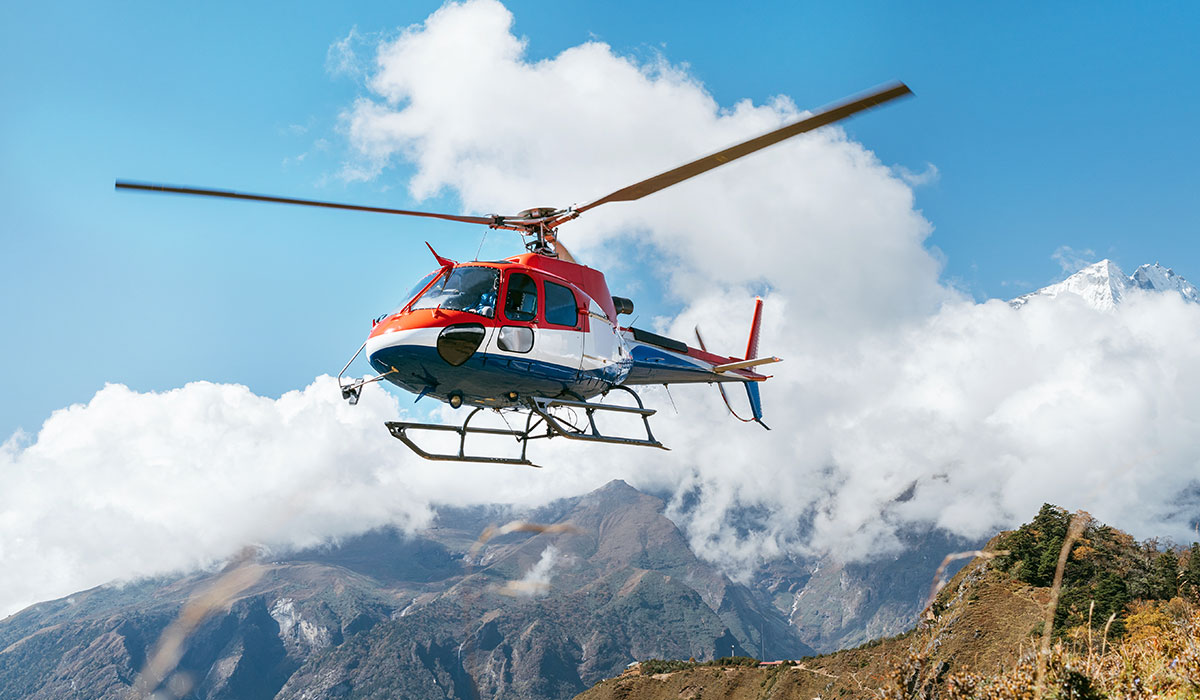
Helicopters like the Bell 407 or the Eurocopter AS350 B3 are the only ones that can fly through the Himalayas because they are so difficult to fly through. No matter what the law says, we do more to keep this tech safe and working well. It comes with a full first-aid kit and an air tank in case of emergency. High-tech systems that watch the weather tell pilots in real time what the weather will be like along their flying path.
When going at high altitudes, the skill of the pilot is very important. People who fly these paths have flown in the Himalayas many times, sometimes for thousands of hours. They go through special training to be able to fly at high levels. This helps them deal with the unique problems that come up when they fly in the mountains. For having been in this business for so long, they also know a lot about the weather and where it's safe to land.
To keep risks as low as possible, altitude management has to stick to certain rules while on trips. People don't spend enough time at high elevations to get the usual altitude sickness signs, so they are less likely to get sick. Because the climb is slow and there are many breaks along the way, the body can get used to the change in altitude more slowly. But because the exposure times are so short, this doesn't happen very often. People can still get air if they need it. Trekkers spend days at high elevations, while helicopter tourists only spend minutes there. This makes the tour safer for people who might get altitude sickness than multi-day trekking.
Weight limits are very important above 4,000 meters. Depending on how much they weigh, helicopters can only carry up to 250 kg, which is about three people. Shuttle flights from Pheriche or Lukla are set up for larger groups. On these flights, people switch places so that everyone has a chance to land at a high altitude. Being very strict about weight limits makes sure that there is enough space for safe emergency moves.
When is the best time for helicopter tours of Everest?
The weather in the Himalayas changes a lot throughout the year, so picking the proper season might make a big difference in your trip. Knowing what each season is like might help you plan the best trip.
Autumn Season (October to November)—Peak Season
October and November are the best months for helicopter trips in Nepal because they are the driest months of the year. With a clear sky and good vision, you'll be able to view mountains all around you. Stable weather makes it less likely that your trip will be canceled or delayed, and the beautiful mountain views with few clouds will make sure your photos are amazing. This time of year is the best for flights that don't stop, but it's also the busiest, so it's important to book well in advance.
Spring Season (March to May) - Expedition Season
From March to May, spring comes to the mountains. The weather is nice, and the temperatures rise, which makes flying more comfortable. This time of year is also the season for climbing Everest, so you might see people trying to reach the top when you fly above base camp. Rhododendron flowers bloom in the lower valleys and lend red, pink, and white to the environment. They look great against the snow and rock. There can be clouds in the afternoon; thus, morning flights usually have better visibility.
Winter Season (December to February) - Off-Peak Adventure
From December to February, the weather is wintery, with HD clarity and snow-covered peaks that look almost too perfect. The sceneries are incredibly clean and undisturbed, with fresh snow covering everything in bright white. But colder weather means you need warmer clothes, and heavy snowfall could cause flight delays, so you need to be able to change your plans. During the winter, there are a lot fewer people, which makes it a more exclusive experience for those who are ready to withstand the cold.
Monsoon Season (June to September)—Not Recommended
Helicopter trips should not be taken during the monsoon season, which runs from June to September. Heavy weather and low visibility make flying hard and risky, and many travelers are upset when their flights are canceled. Cloud cover makes it hard to see the mountains, so you might fly all the way there and only see gray mist. Most experienced operators don't want you to book during this time unless you can change your plans easily and don't mind the chance of having to cancel multiple times.
Cost Factors
Helicopter tours of Everest Base Camp are a big expenditure, but knowing what you get for your money might help you understand the cost. Here's how much things usually cost:
Prices for Tours:
- Group/Sharing Tours: $1,250 to $1,500 per person for five people
- Private Tours: $4,600 to $7,500 for a group of 1 to 5 people
- One Shuttle: $5,500 to $5,800
- Double Shuttle (for weight loss): $6,500 to $7,000
What You Get on Your Tour:
- A helicopter ride to and from Kathmandu
- All expenditures for gasoline and landing
- Breakfast at Hotel Everest View with hot drinks and food
- Service from a pilot and team with a lot of experience
- Safety gear, including oxygen tanks and first aid kits
- Every passenger is guaranteed a window seat
- Full insurance coverage
These prices include all you need for a safe, comfortable, and memorable trip to the top of the globe. Because everything is included, there are no hidden costs or unexpected fees, allowing you to fully enjoy the event.
Helicopter rescue operations on Everest
Even though commercial flights to the top are still not allowed, helicopters are very important for rescue missions that save lives every climbing season. Rescue services should be known to anyone who wants to do something in the Everest area.
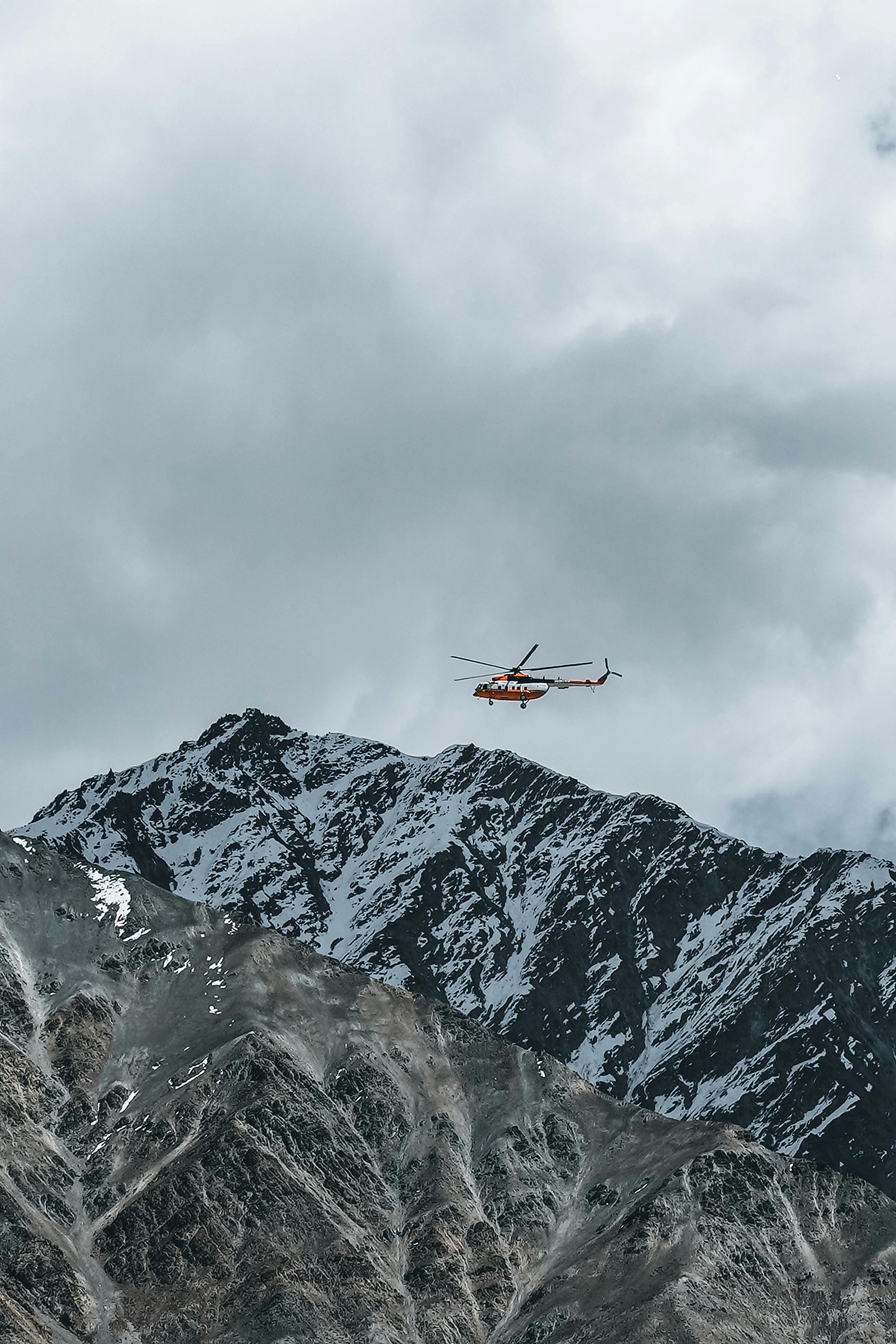
Rescue helicopters can fly as high as Camp 2 (6,400 meters) and land right there. This means that they can stop and pick up patients. The terrain and altitude above Camp 2 make it very dangerous for helicopters to land directly. Rope-assisted rescues are what pilots do instead. The chopper hovers while crew members lower lines to pull sick or hurt climbers out. Evacuations like these save lives because they help treat altitude sickness, which can kill in hours if not handled, as well as injuries from falls, frostbite, and other health problems. During the climbing season, high-altitude rescue planes are always ready to go, with pilots ready to take off at any time.
Emergency costs can range from $5,000 to $15,000 or more, depending on the height and condition. As the level goes up, rescues become more dangerous and cost more because they use more fuel. If you want to do anything in the Everest area, like hiking, climbing, or taking a helicopter tour, you need full travel insurance that covers activities that take place at high altitudes. Many regular travel insurance plans don't cover trips above certain heights, so it's important to read your policy's terms and conditions carefully to avoid any nasty financial surprises.
Why should you plan your Everest trip with HeliOnCall?
We want to improve Heli On Call so we can offer great helicopter trips in the Himalayas. Our fleet of high-altitude helicopters is the greatest in the world and is always kept up to the highest international standards. Every plane is checked and updated on a regular basis. Our experienced pilots have flown in the Himalayas for thousands of hours and have been trained to deal with the special problems that come with flying in the highlands.
There are a number of different things we can do. For instance, we offer private trips for people who want to do something unique, group departures for people who want to save money, and itineraries that may be changed to meet your interests and schedule. Safety is always our first priority. We go above and beyond what the law says we have to do to keep people safe. We promise that everyone will have a window seat since we think that everyone should be able to see these lovely mountains without anything in the way.
We fly in a way that is good for the environment and the mountains. This helps protect these important ecosystems. We have a lengthy history of delighted clients and a spotless safety record that we strive hard to keep every day. If planes can't fly due to things we can't control, our weather guarantee ensures you'll get all your money back. This means you won't have to worry about losing money.
Getting Ready for Your Helicopter Ride Over Mount Everest
Your trip will be safe and fun if you plan ahead. You should wear layers and be warm because the temperature can drop a lot as you travel up in altitude, especially in the summer. A down jacket or heavy fleece will keep you warm, while thermal trousers or heated pants will keep the cold wind off your legs. Frostbite can arise quickly on your hands and feet, so keep them warm by wearing gloves, a hat, and a scarf. Strong, comfortable shoes or hiking boots will help you stay steady as you land. High SPF sunscreen is also very vital because UV rays grow considerably stronger at high altitudes. Bring sunglasses or goggles to shield your eyes from the intense light that comes off of ice and snow.
You need to bring a legitimate passport or ID with you because there will be checkpoints along the way that will check it. You should bring your camera or smartphone to take pictures, but you should also carry extra batteries because the cold temperature drains batteries faster than usual. Take a water bottle with you to stay hydrated because the dry air in the mountains quickly removes moisture from your body. Bring any prescriptions you need to take on a daily basis and your travel insurance papers in case something goes wrong.
There aren't many physical prerequisites for helicopter trips compared to trekking. You don't need to be very fit to walk short distances at the landing stops; you just need to be able to walk a little bit. People with serious heart or lung problems should talk to their doctors before making a reservation, though, because even short exposure to high altitudes might impair these systems. Knowing how altitude can affect you can help you spot symptoms if they do show up, although major altitude sickness is very unusual because you don't spend much time at high altitudes. If you're worried about your health, it makes sense to talk to your doctor. They can provide you advice that is relevant to your circumstance.
Other helicopter tours are available besides Everest.
If you want to go on aerial adventures in the Himalayas, there are many other amazing places you may visit by helicopter. Each trip shows off a distinct part of Nepal's beautiful mountain ranges through its own unique sceneries and activities.
Helicopter Tour of Annapurna Base Camp
The Annapurna Base Camp Helicopter Tour takes you to the Annapurna Sanctuary, a natural amphitheater with some of the most spectacular peaks in the world. At 4,130 meters, you land in the middle of this beautiful cirque, where you can see the Annapurna Massif, Machapuchare (which has two peaks that look like fish tails), and Hiunchuli, which almost completely surrounds you. The sanctuary's unique geology makes a protected bowl where the mountains seem to hug you, giving you a more personal experience than the open magnificence of Everest.
Tour of Langtang by Helicopter
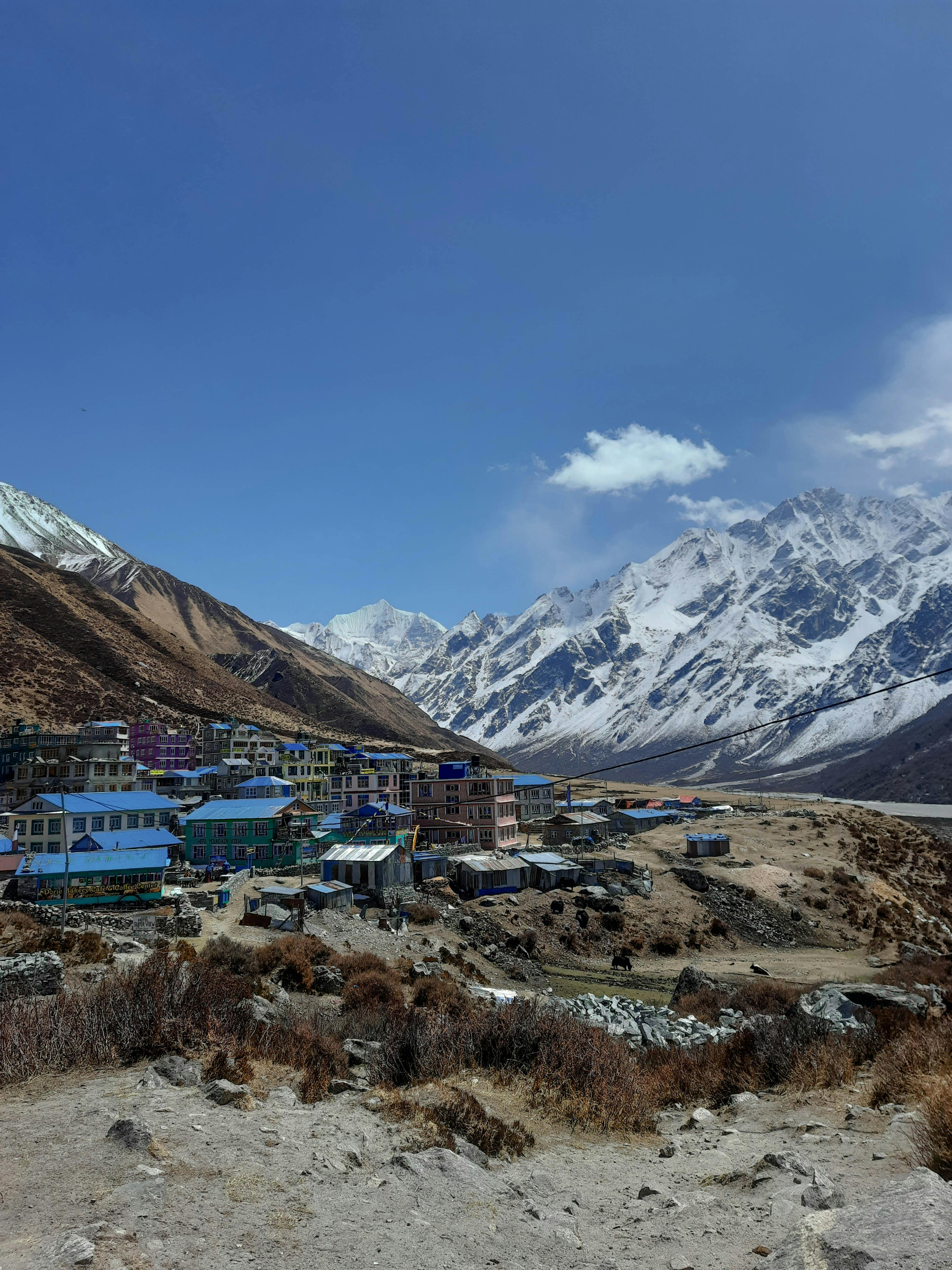
The Langtang Helicopter Tour takes you on a beautiful flight to Kyanjin Gompa at 3,870 meters. It's a less crowded option than Everest, but it still offers stunning mountain views. The views of Langtang Lirung and the Ganesh Himal range offer a distinct side of Nepal's diverse Himalayas. These valleys and peaks receive fewer visitors than the famous Everest region. The Langtang Valley is important since the 2015 earthquake caused a lot of damage there, and visiting now helps the people who live there restore their lives. The area has a lot of Tamang culture, old monasteries, and beautiful mountain scenery.
Helicopter Tour of the Gokyo Lakes
The Gokyo Lakes Helicopter Tour takes you to beautiful turquoise glacier lakes that look impossibly blue against white snow and gray rock. This tour can take you to both Everest and Gokyo Valley in one flight. It lands near Gokyo Ri at 5,357 meters, where the views are just as good as or better than those from many more recognized places. The six lakes in the series are great for taking pictures, especially in the morning or evening when the colors are brighter. You can see four of the world's six highest peaks from Gokyo Ri: Everest, Lhotse, Makalu, and Cho Oyu. This makes for one of the most beautiful views on Earth.
Helicopter Tour of Upper Mustang
The Upper Mustang Helicopter Tour takes you to the remote former kingdom of Mustang, which is often called the This dry, high-altitude desert landscape feels more like Tibet than Nepal, with ancient cave dwellings, centuries-old monasteries, and the walled city of Lo Manthang. The red and brown cliffs, the wind-carved rock formations, and the Tibetan Buddhist culture make this place feel like it's from another universe. It's very different from the green valleys and snowy peaks of other places.
Making Your Dream Come True
Helicopters can't fly to the top of Everest all the time because of bad weather and safety rules, but helicopter excursions in the Everest area are a unique and easy way to see the world's tallest peak. These excursions give you the adventure of a lifetime without the physical difficulties of multi-week adventures. You can see the summit from the air or land at stunning vistas like Kala Patthar.
A helicopter tour of Everest is the safest, most comfortable, and most distinctive way to visit Mount Everest. It's also the best way to see it from a different angle. Seeing these mountains from the air changes how you think about them because it shows you their actual size and beauty in ways that looking at them from the ground can't.
Are you ready to see Mount Everest from the sky?
Don't let your body, your time, or the hardships of trekking stop you from reaching your Everest goal. Anyone can see the beauty of the world's tallest mountain with HeliOnCall, no matter their age, fitness condition, or time.
Get in touch with HeliOnCall now
Contact Us:
- Phone: +977 9851417030
- Mobile/WhatsApp: +977 9851417030
- Email: [email protected]
- Website: www.helioncall.com
- Address of the Office: Bhagwanbahal Marg, Thamel, Kathmandu
Hours of Operation:
- From Sunday to Friday, from 9:00 AM to 6:00 PM (Nepal Time)
- Saturday: 10:00 AM to 4:00 PM
- Emergency hotline open 24 hours a day, 7 days a week: +977 9851417030
Online Media:
- Facebook: @HeliOnCallNepal
- Follow us on Instagram at @helioncall
- HeliOnCall Reviews on TripAdvisor
There are only a few spaces left during peak season, so book your window seat soon to make sure you don't miss out on this chance to make memories that will last a lifetime. Our team is ready to help you with any questions you have, make your experience unique, and walk you through every step of the booking process. Book today and let us take you on the trip of a lifetime over the tallest mountains in the world.
Questions That Are Often Asked
Q: Has anyone ever flown a helicopter to the top of Mount Everest?
A: Yes, on May 14, 2005, French pilot Didier Delsalle landed on the top of Everest in a Eurocopter AS350 B3. This is still the only confirmed landing at the top of a mountain in history, and it was done with a specially modified plane in perfect weather.
Q: Why can't helicopters go to the top of Everest on a regular basis?
A: The very high altitude makes the air extremely thin, which means helicopters can't have enough lift and power. Along with unpredictable weather that can include gusts over 160 km/h, temperatures below freezing, and legal constraints from the Nepalese government, frequent summit flights are still not practicable and would be extremely risky.
Q: What is the highest altitude that helicopters may safely fly in the Everest area?
A: Commercial helicopter tours usually go up to 5,545 meters at Kala Patthar. Specialized high-altitude helicopters could, in theory, go up to about 7,000 to 7,200 meters, but these flights are rarely tried.
Q: Are helicopter tours a problem for people with altitude sickness?
A: The risk is still quite low because there isn't much time spent on the ground at high altitudes, and the descent back to lower elevations is quick. When it comes to altitude sickness, tours are significantly safer than multi-day treks because you spend only a few minutes over 5,000 meters instead of days.
Q: Can I go on a helicopter tour if I'm old or sick?
A: Most people, no matter how old they are, can safely go on helicopter trips. But if you have heart problems, breathing problems, or other major health issues, you should see your doctor first. Altitude impacts these systems even for short periods of time.
Q: What happens if the weather stops the flight?
A: If the weather makes flying risky, trustworthy companies like Heli On Call will give you a full refund or let you reschedule. Pilots make careful choices about whether conditions are suitable for flying, and your safety is more important than any schedule.
Q: How many passengers can fit in one helicopter?
A: Helicopters usually carry five people and a pilot at lower altitudes. However, at higher altitudes (over 4,000 meters), only two to three passengers can fly at once because of the weight limits needed to keep the helicopter safe in thin air.
Q: Can helicopters save people at the top of Everest?
A: Rescues above Camp 2 are very hard and dangerous. Helicopters may only land directly at Camp 2, which is about 6,400 meters high. In some situations, rope-assisted evacuations may be possible over that height, although they depend on the weather, the height, and the situation.
Experience the impossible. Reach toward the skies. With HeliOnCall, you can see Everest like never before.