







- A Brief History of Helicopter Rescue in the Himalayas
- Where are rescue operations most common?
- The Primary Reasons for Emergency Helicopter Evacuation
- Major Helicopter Rescue Zones: Where Emergency Services Are Most Critical
- How Does a Rescue Operation Run? Mastering the Seasons
- The HeliOnCall Fleet: Your Safety is Our Foundation
- Real Stories: The Impact of Helicopter Rescue
- The Critical Question: Rescue Helicopter Cost in Nepal
- Experience the Himalayas with the Rescue Experts
- Your Guide to the Tour Experience:
- Frequently Asked Questions (FAQs)
- What Our Clients Say,
- Why Choose HeliOnCall?
- Conclusion: Your Adventure, Our Responsibility
- Call to Action:
Search and Rescue Helicopter in Nepal: HeliOnCall's Guide to Safety & Scenic Tours in Nepal
The Himalayas of Nepal serve as a beacon for mountaineers, trekkers, and adventurers everywhere. In addition to their unparalleled challenges and breathtaking beauty, the mountains also pose substantial risks. In Nepal, a search and rescue helicopter serves as a literal lifeline during these critical moments. At HeliOnCall, we are at the forefront of this endeavor, offering not only emergency rescue services but also scenic helicopter tours that enable you to experience the Himalayas in a safe and magnificent manner.
This blog describes the vital role of helicopter rescue operations and how our expertise directly enhances your adventure, whether you're on a rescue mission or a once-in-a-lifetime tour.
A Brief History of Helicopter Rescue in the Himalayas
Helicopter rescue in Nepal began humbly but has evolved into a highly sophisticated and coordinated effort. The combination of advanced pilot training and the establishment of dedicated private aviation companies such as HeliOnCall has revolutionized this service. Today, we conduct rescue operations in Everest, Annapurna, and Makalu with precision, thereby saving hundreds of lives annually. The same pilots and machines that perform these daring rescues are the ones we trust to fly our scenic tour packages.
Where are rescue operations most common?
Helicopter rescues in Nepal are most frequently required in the high-altitude and remote regions that are also popular trekking destinations. Key areas include:
- Rescue Operation in Everest: The Khumbu region, especially the area from Lukla to Everest Base Camp.
- Rescue Operation in Annapurna: The Annapurna Circuit and Sanctuary, particularly the high pass of Thorong La.
- Rescue Operation in Makalu: A more remote region where any emergency requires a skilled helicopter evacuation.
Fun Fact: Many of our Everest Base Camp Helicopter Tour and Annapurna Base Camp Helicopter Tour passengers fly over these very routes, piloted by the same experts who conduct rescues there daily.
The Primary Reasons for Emergency Helicopter Evacuation
Altitude Sickness: The Silent Threat at High Elevations
Altitude-related illnesses are the most common reason for emergency helicopter rescues in high alpine areas. As climbers and trekkers go higher than 2,500 meters, the air gets less oxygen, which can cause several problems, from minor Acute Mountain Sickness (AMS) to life-threatening High Altitude Pulmonary Edema (HAPE) and High Altitude Cerebral Edema (HACE).
Signs that might mean you need to be evacuated by helicopter:
- Very bad headaches that don't go away with medicine
- Extreme tiredness and not being able to walk
- Confusion or a change in mental condition
- Having trouble breathing even when you're not doing anything
- Coughing that won't go away and pink or foamy sputum
- Losing your balance and coordination
The only way to treat severe altitude sickness is to go down right away. When a patient is unable to walk down, they must be transported by helicopter. Time is crucial; if not treated immediately, HAPE and HACE can rapidly worsen and become fatal within hours.
Traumatic Injury
The terrain in the mountain regions is naturally dangerous. Injuries are always a high risk because of steep trails, loose rocky trails, icy surfaces, and weather, which can change quickly. In Nepal, helicopter rescues primarily focus on addressing various catastrophic injuries.
Broken bones & fractures: Falls on rocky ground or during technical climbing can cause compound fractures, especially in the legs, ankles, and arms, which makes it tough to get yourself out.
Bad sprains and dislocations: A badly twisted ankle at a high altitude can keep a hiker from trekking out, especially if they are several days away from the next road.
Head injuries: Slips, falls, or falling rocks can cause concussions or worse traumatic brain injuries that need medical attention right away.
Hypothermia and frostbite: Really cold weather and strong winds can quickly endanger your life, especially if you're already tired or hurt.
In these cases, helicopter rescue not only gets people out of danger quickly, but it also stops them from becoming much more hurt during a long rescue attempt on the ground.
Sudden Medical Emergencies: Pre-existing Conditions at Altitude
Mountains don't care how fit or old you are; they test everyone the same way. People who already have health problems may have sudden health problems while trekking at high altitudes because of the physical demands of the activity:
- Events in the heart: Heart attacks or severe arrhythmias, which are often made worse by the stress of high altitude and hard work
- Stroke: Being dehydrated, at a high altitude, and under a lot of stress all raise the chance of having a stroke.
- Severe dehydration: May result in cardiovascular and renal issues.
- Diabetic Emergency: Hard to control blood sugar levels in very bad situations
- Respiratory crises: Asthma attacks or other breathing problems that get worse in thin air
For serious medical circumstances, getting people out of the area quickly by helicopter is quite important. Taking the patient to a hospital with better medical equipment can make the difference between getting better and dying.
Natural Disasters: Nature's Unpredictable Fury
Mountain areas are more prone to sudden and severe natural disasters, which can simultaneously leave many people stranded or injured.
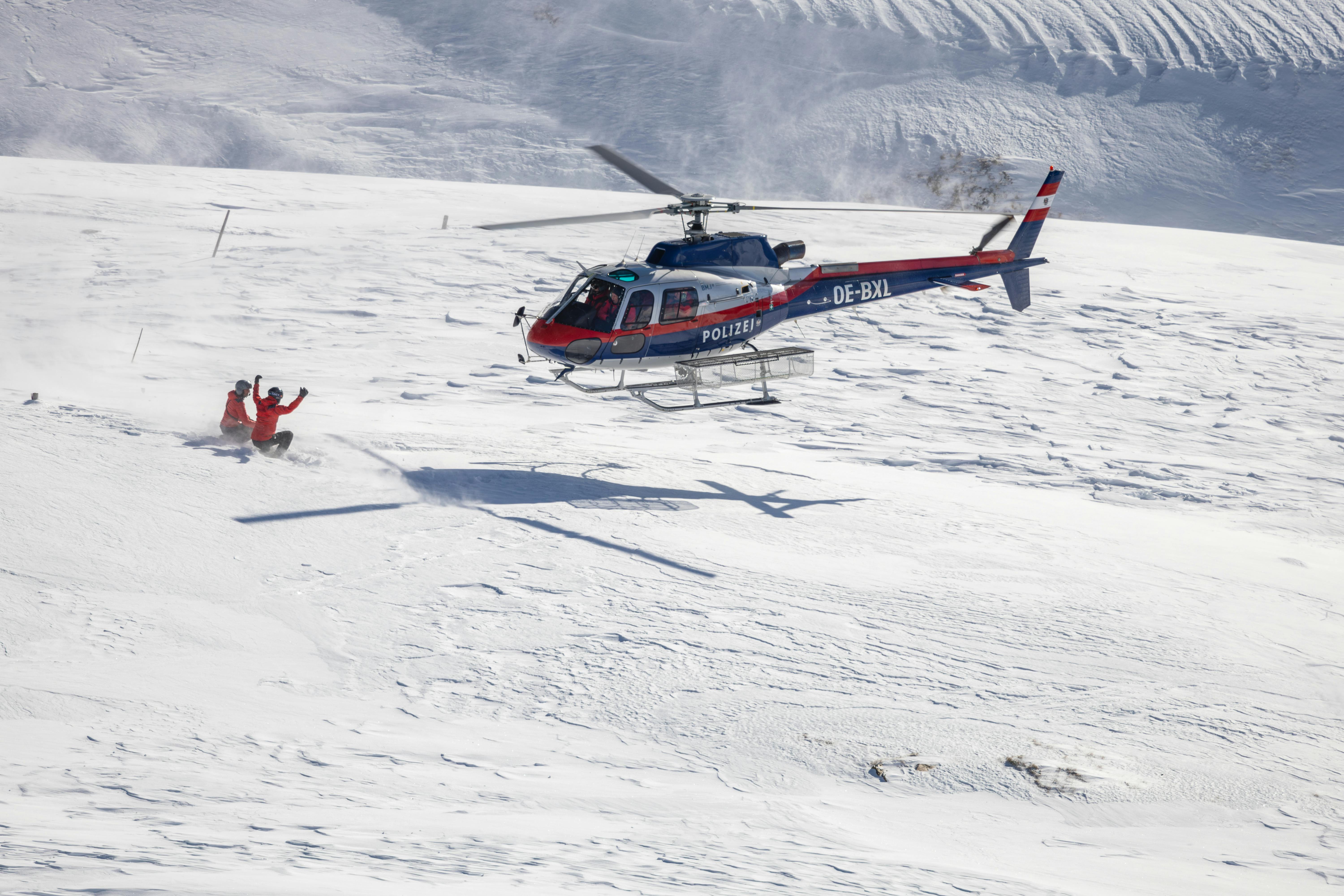
Avalanches: The most feared mountain hazard, capable of burying climbers and trekkers under tons of snow and ice. Helicopter rescue teams typically use avalanche dogs and special tools to find and rescue people who are still alive.
Landslides and rockfalls: Heavy rains or earthquakes can cause huge slope failures that obstruct routes, damage bridges, and hurt people who are hiking.
Flash floods: Monsoon rains can turn calm mountain streams into raging torrents in a matter of minutes, destroying trails and trapping people.
Earthquakes: Seismic disturbances can cause many other problems and damage infrastructure and communication networks at the same time.
Helicopters are the main instrument for search and rescue efforts in disaster situations because they can get to affected areas when all ground access is shut off.
Lost and Stranded: When the Trail Disappears
Even people who have been hiking for a long time might become lost in the mountains. Some things that can make trekkers lose their way are:
- Fog, snow, or darkness can make it difficult to see.
- Trails that aren't indicated or trail junctions that are hard to understand
- Being worn out makes you make worse choices.
- Failure of equipment (GPS, maps)
- Being apart from the main group
Being lost in the mountains can quickly turn deadly due to bad weather, dangerous animals, and the risk of developing hypothermia. Thermal imaging, aerial surveys, and working with ground teams are all used by search and rescue helicopters to find missing people and get them to safety.
Major Helicopter Rescue Zones: Where Emergency Services Are Most Critical
High-Altitude Trekking Corridors
The most popular high-altitude trekking routes are also the ones where helicopter rescues happen the most often. These places have a lot in common: they are quite high up, hard to get to, and have many trekkers with different levels of skill.
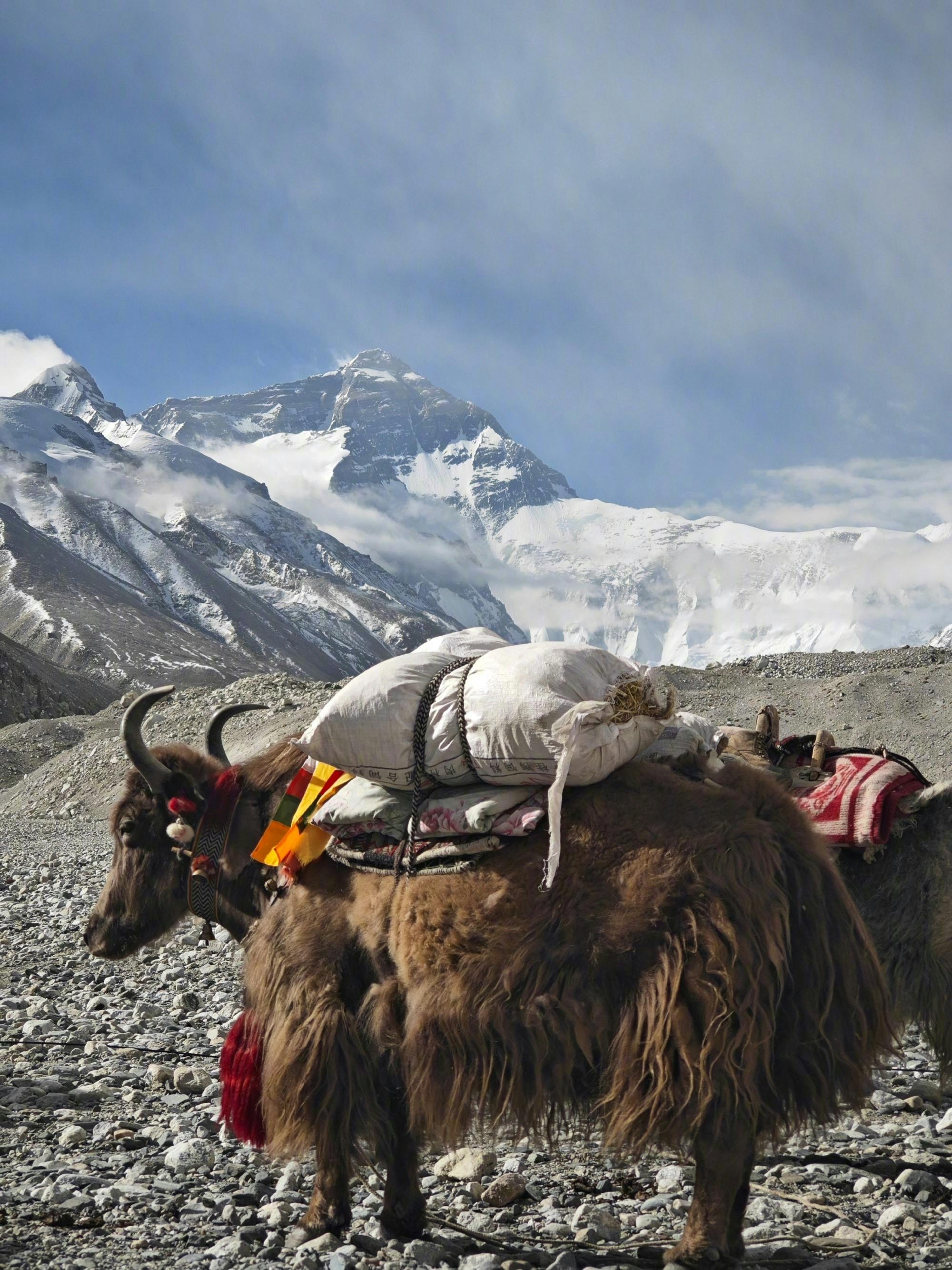
Everest Region Evacuations: The trek to Everest Base Camp at 5,364 meters attracts thousands of people each year, but the quick altitude gain and tremendous elevation make it one of the most rescue-intensive routes. Helicopters often fly to and from landing zones at Pheriche, Gorak Shep, and even Base Camp itself, which is a popular place to visit. The thin air at the limits of helicopter capability makes every landing a technical challenge. Some of the most common places for helicopters to land in the Everest region are
| Helipad Location | Altitude (m) | Nearby Village/Area | Purpose |
| Lukla – Tenzing Hillary Airport | 2,860 m | Lukla (Gateway to Everest) | Main gateway, refueling, arrivals & departures |
| Namche Bazaar / Syangboche | 3,440–3,780 m | Namche Bazaar & Syangboche Ridge | Shuttle flights, breakfast stop, acclimatization, scenic tours |
| Tengboche | 3,867 m | Tengboche Monastery | Cultural stops, rescues, scenic flights |
| Pangboche | 3,985 m | Pangboche village | Rescue & transfer point |
| Pheriche | 4,371 m | Pheriche (medical & trekking stop) | Medical evacuation, shuttle stop (weight limits) |
| Dingboche | 4,410 m | Dingboche village | Emergency landings, rescues |
| Gokyo | 4,790 m | Machhermo, Dole, Thore & Dragnag | Tour landings, expedition support, rescues |
| Dole | 4,200 m | Machhermo, Gokyo, Thore & Dragnag | Emergency landings, rescues |
| Thangnak | 4,700 m | Machhermo, Gokyo, Thore & Dragnag | Technical landings, rescues, EBC access |
| Kenjuma | 3,550 m | Namche Bazaar & Syangboche Ridge | Shuttle flights, breakfast stop, acclimatization, scenic tours |
| Dzongla | 4,830 m | Dragnak/Thangnak | Rescue & transfer point |
| Lobuche | 4,940 m | Lobuche settlement | Technical landings, rescues, EBC access |
| Gorak Shep | 5,164 m | Gorak Shep (last lodges before EBC) | Shuttle to EBC/Kala Patthar, rescues |
| Kala Patthar | 5,644 m | Above Gorak Shep ridge | Scenic landings, photography of Everest panorama |
| Everest Base Camp (EBC) | 5,364 m | Khumbu Glacier (seasonal tents) | Tour landings, expedition support, rescues |
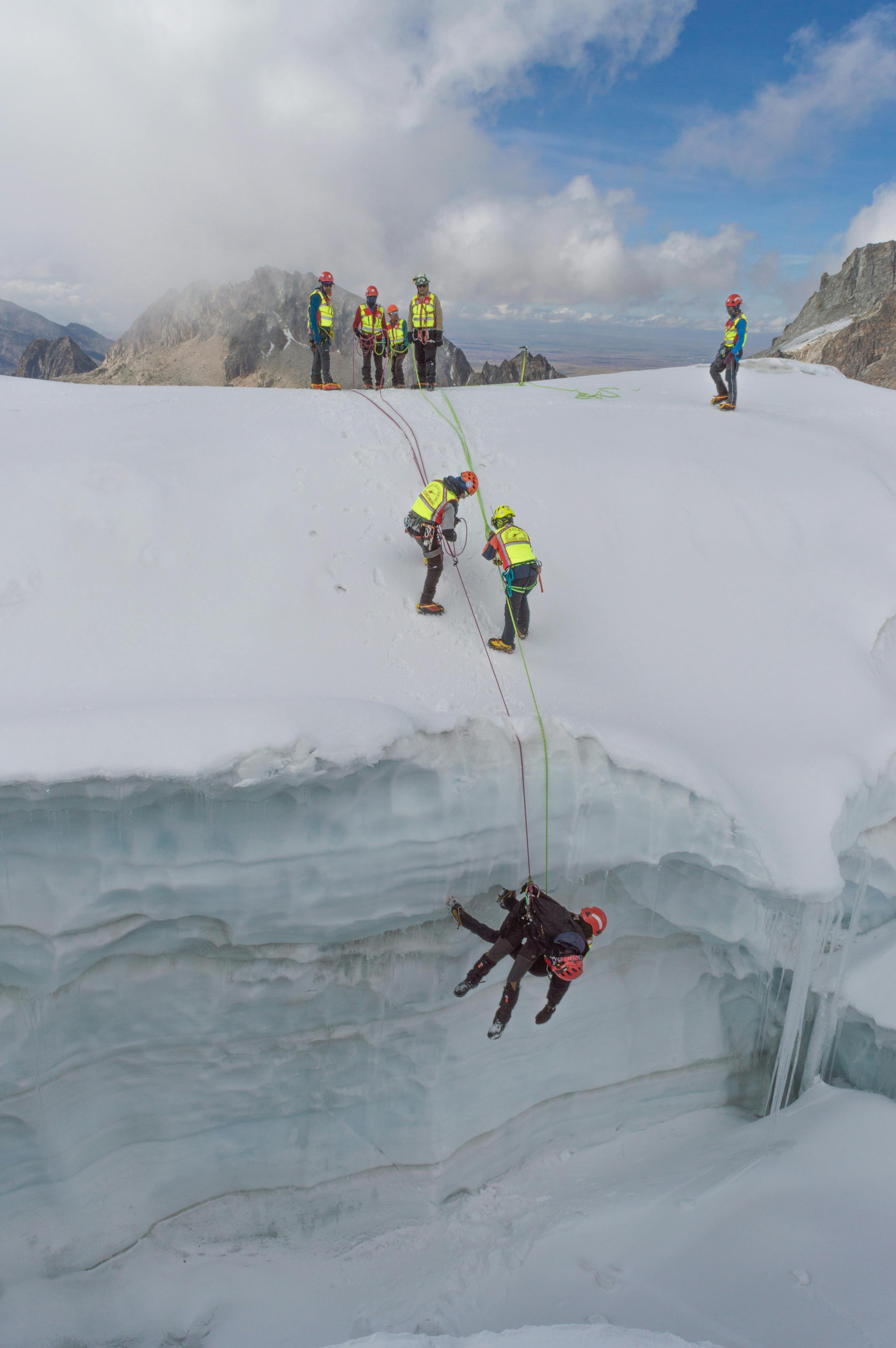
Fun fact: Nepal is home to a number of prominent tourist sites, one of which is the Everest region. When we are conducting rescue operations, we are able to land anywhere in the Everest region; in the event that landing is not possible, rescue is carried out by rope by trained rescue experts.
Annapurna Circuit Rescues: This famous journey circuits the Annapurna range, passing through the 5,416-meter Thorong La Pass. The high altitude, changing weather, and physical difficulties of trekking for weeks at a time mean that people often have to leave, especially around the pass and at Manang, which is an important stop for acclimatization.
Langtang Valley Operations: The Langtang region is closer to Kathmandu, but just as difficult. There are regular rescue operations occurring in the Langtang region due to significant changes in the terrain after the 2015 earthquake, which have made it more dangerous.
Remote and Technical Climbing Areas
Beyond trekking routes, true wilderness climbing areas are even harder to rescue people from than trekking routes:
The Manaslu Circuit: Manaslu is the eighth-highest mountain in the world. Its circuit walk takes you over high passes and remote communities where it takes days to get to a hospital. The Larkya La pass, which is 5,160 meters high, is a common place to evacuate.
Makalu Base Camp Region: This area is one of the most remote trekking destinations, and rescues here demand very skilled pilots because there aren't many places to land and operations are done at very high altitudes, above 5,000 meters.
Dhaulagiri and Kanchenjunga Regions: These places are on the periphery of major trekking routes and get fewer travelers, but they are also riskier because they are very isolated, have little infrastructure, and have difficult terrain.
Far Western Nepal: The Forgotten Frontier
The far western districts of Nepal are among the most beautiful and culturally rich, and they offer great trekking. However, their remoteness makes helicopter rescues even more important.
Dolpa and Rara Lake: This desert area at a high altitude has Shey Phoksundo National Park and the beautiful Rara Lake. Helicopter evacuation is sometimes the only way to get to medical emergencies because most places don't have roads, and the highest points are over 5,000 meters high.
Limi Valley: This secluded valley near the Tibetan border lets you experience the culture, but you have to be self-sufficient. In a medical emergency, a helicopter must be used to evacuate people, as ground transport could take days.
Saipal Himal and Badimalika: These far western areas are among the least frequented because they are quite isolated and have spiritual meaning. Rescue by helicopter here means flying considerable distances from the nearest airports.
How Does a Rescue Operation Run? Mastering the Seasons
A search and rescue helicopter mission is a well-orchestrated process, but it's shaped by the fierce Himalayan seasons.
- The Emergency & Alert: The emergency is reported via satellite phone or through a guide.
- Coordination & Approval: We coordinate with authorities and obtain flight permissions—a process streamlined for emergencies.
- Mobilization: The helicopter is dispatched with a skilled pilot and medic.
- The Rescue: The pilot performs a high-stakes landing or winch operation.
- Evacuation: The patient is flown directly to a hospital in Kathmandu.
Emergency Contact Protocols
In Case of Emergency:
- Stay calm and look at the problem.
- Get in touch with your journey leader or guide immediately.
- If you're on your own, call rescue coordination via a satellite phone.
- Give exact GPS coordinates for the location
- Clearly describe the symptoms or injuries.
- Take note of the weather and the landing zones that are available.
- Be ready with your insurance details
- Listen to what the rescue coordinators tell you to do.
- Get the patient ready to leave. If you can, mark the landing zone.
Remember: Every minute counts in mountain emergencies. Don't delay calling for help if the situation is serious.
Seasonal Challenges:
- Spring/Autumn (Peak Season): The busiest time with generally stable weather, though sudden storms can appear.
- Monsoon: Low clouds and heavy rain test pilot skill, requiring patience for a safe "weather window."
- Winter: Intense cold affects aircraft performance, but crystal-clear skies often provide the most spectacular flying conditions.
The HeliOnCall Fleet: Your Safety is Our Foundation
The powerful helicopters used for emergency rescue are the same ones we use for our tours. This isn't a coincidence; it's a commitment to safety.
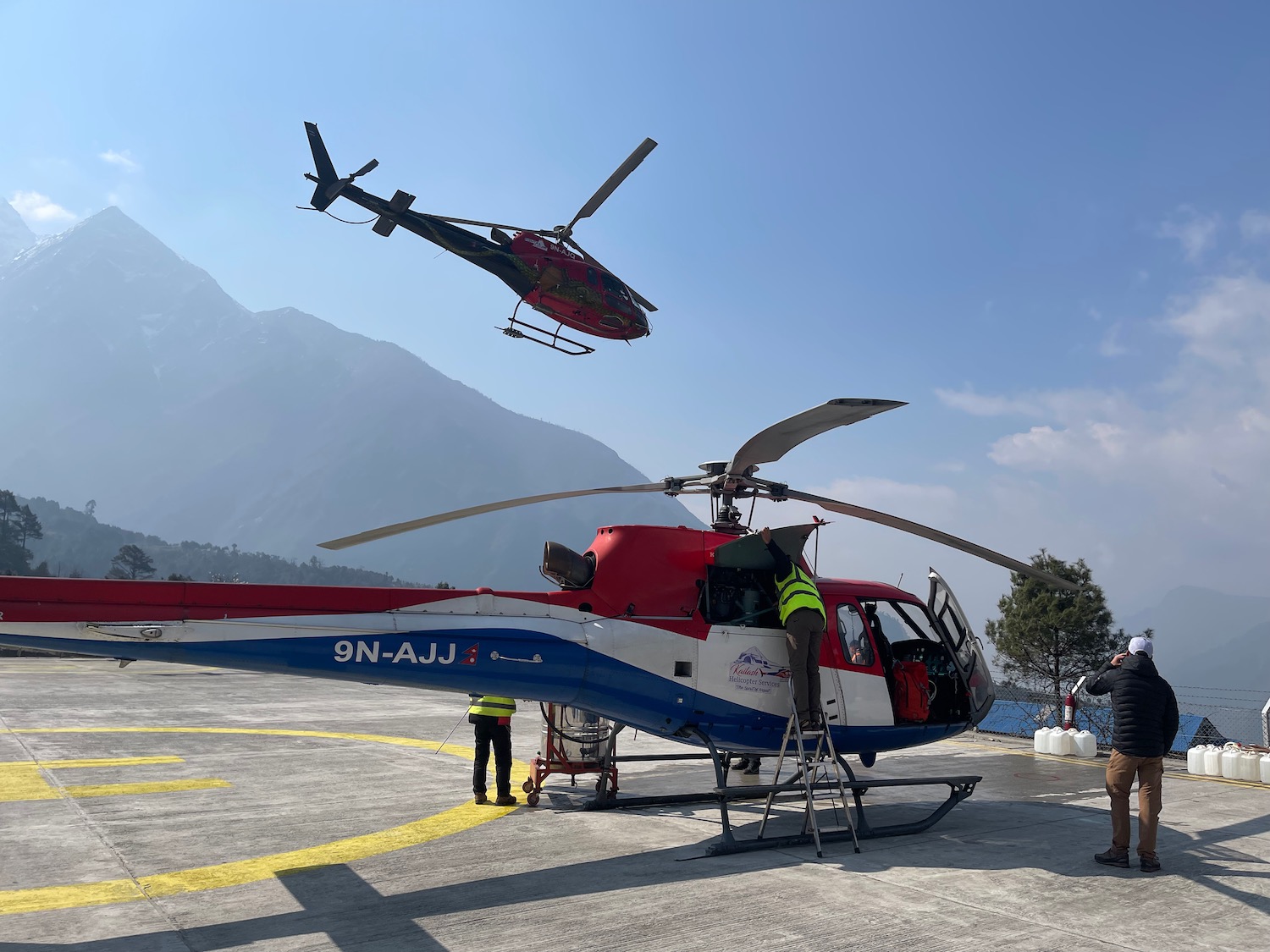
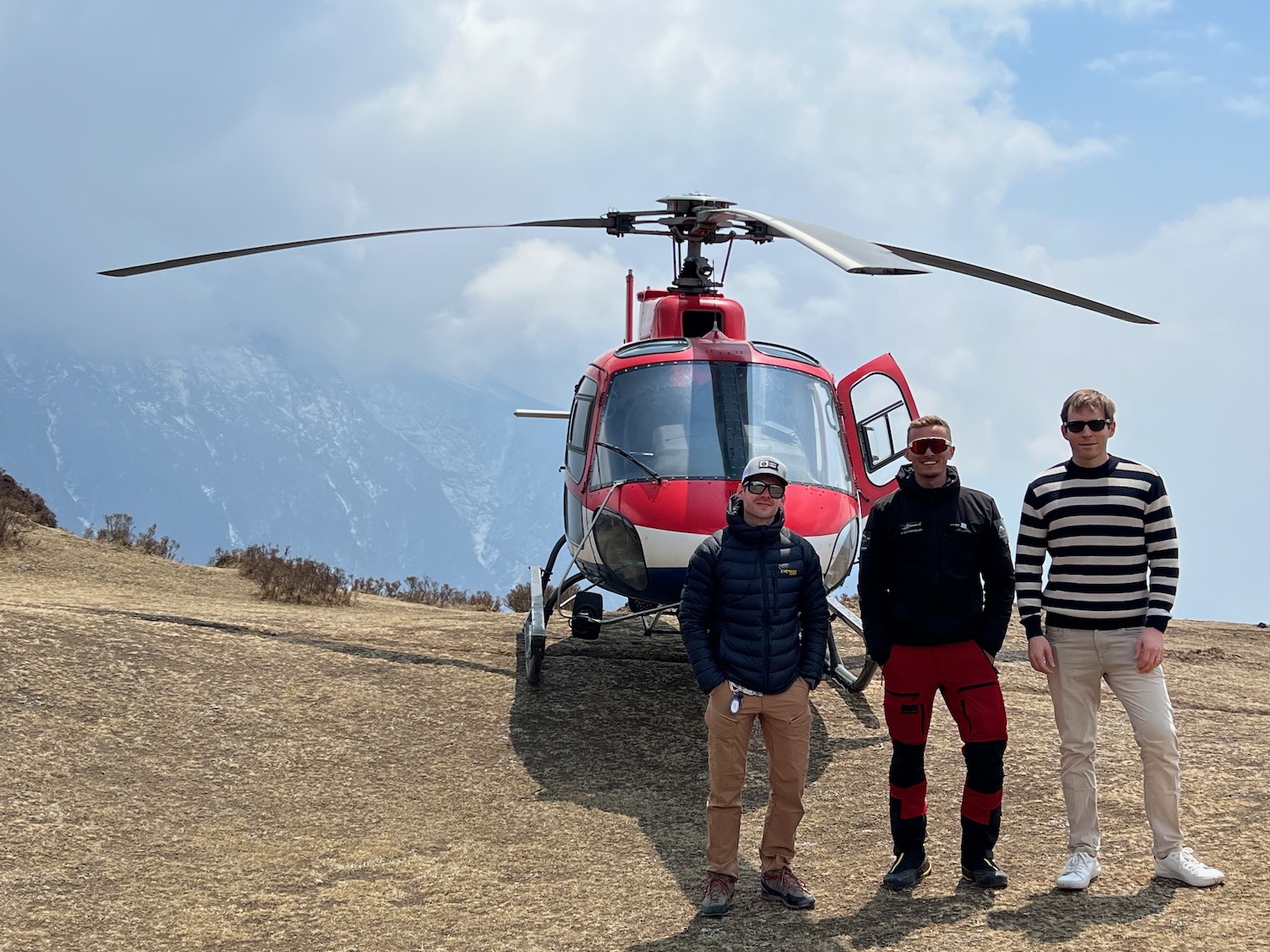
- Airbus AS350 B3e (H125) "Ecureuil": The star of high-altitude operations, capable of landing at Everest Base Camp. This is the primary helicopter for our most popular mountain tours.
- Eurocopter B3 & Bell 206 B3: Reliable workhorses used for various missions and shorter tours.
When you book a tour with HeliOnCall, you are flying with the most experienced pilots and the most capable machines in Nepal. Your safety is our highest priority because we operate in the same environment where lives depend on us.
Technology in the Cockpit: The Silent Co-Pilot
Our aircraft are equipped with life-saving technology that also ensures your tour is smooth and secure:
- TAWS (Terrain Awareness and Warning Systems): Alerts pilots to avoid terrain, crucial in mountainous regions.
- Advanced GPS & Sat-Com: For precise navigation and constant contact, even in remote areas, like during a rescue operation in Makalu.
- Night Vision Goggles (NVG) Capability: For missions that extend into low-light conditions.
The Unsung Heroes: The Pilots and Crew of HeliOnCall
A machine is only as good as its team. Our pilots are the unsung heroes, undergoing rigorous training for mountain navigation, pinnacle landings, and winching in thin air. They are the ones who will fly into a whiteout on Everest or navigate a narrow valley in Annapurna to save a life. When you book a tour with us, you are flying with these same heroes. Their intimate knowledge of every mountain and weather pattern doesn't just save lives—it makes your tour safer and more informative, as they often act as impromptu guides.
Real Stories: The Impact of Helicopter Rescue
Case Study: Altitude Sickness at Base Camp
A 35-year-old hiker was quite sick with HAPE at 5,200 meters. Within six hours of the first symptoms, she was confused, couldn't move, and her oxygen levels had dropped to deadly levels. Within 90 minutes of the emergency call, a chopper picked her up. Two hours later, she was in a Kathmandu hospital getting oxygen therapy. She got completely better, which would not have been possible without a quick helicopter evacuation.
Case Study: Avalanche Rescue
Following an avalanche that buried three climbers, a rescue helicopter was on scene within 45 minutes, working with ground rescuers to evacuate survivors. Two climbers were successfully rescued; the helicopter's speed in reaching the remote location and providing immediate evacuation was credited with saving their lives.
Case Study: Lost Trekker Recovery
A solo trekker became disoriented in fog and wandered off-trail. After 36 hours missing, a search helicopter using thermal imaging located him in a rocky area where he had taken shelter. Hypothermic and dehydrated but alive, he was evacuated to safety. The pilot noted that ground search teams would have taken days to search the same area the helicopter covered in hours.
The Critical Question: Rescue Helicopter Cost in Nepal
This is one of the most crucial questions. A rescue helicopter cost in Nepal can range from $4,500 to $9,000 or more, depending on location and complexity.
This is where insurance is non-negotiable. Never trek without specialized travel insurance that covers high-altitude helicopter evacuation.
Peace of Mind with Every Tour: When you fly on a HeliOnCall tour, you are briefed on safety protocols by the very team that manages emergencies. We strongly advise all our tour clients to ensure they have adequate insurance, and we can assist you in verifying your coverage.
Experience the Himalayas with the Rescue Experts
Why should you use HeliOnCall for your picturesque trip? You receive more than just a view; you get the best safety and knowledge.
- Everest Base Camp Heli Tour: Fly above the Khumbu Icefall and land at Kala Patthar or Base Camp proper.
- Annapurna Base Camp Heli Tour: Get a close-up look at the beautiful Annapurna massif.
- Langtang Valley Heli Tour: Discover a stunning, lesser-known valley rich in culture.
- Custom Heli Tours: Plan your trip to secluded valleys and monasteries.
Our rescue missions are known for their strict safety standards and skilled pilots, and every tour follows the same rules.
Your Guide to the Tour Experience:
Wondering what it's like to fly with us?
- Pre-Flight Briefing: A comprehensive safety talk from our expert crew.
- Headsets Provided: Hear the pilot's commentary and communicate easily.
- What to Wear/Bring: Dress warmly and bring sunglasses and your camera!
Beyond Rescue: The Other Vital Roles of Our Helicopters
Our commitment to the Himalayas extends beyond emergencies. This versatility guarantees the constant refinement of our team's skills.
- Logistical Support: Transporting supplies to remote expeditions.
- Aerial Filming: Supporting documentary crews.
- VIP Charter: Providing efficient travel for those with limited time.
This diverse experience means when you fly with us, you benefit from a team deeply integrated into the fabric of the Himalayas.
Frequently Asked Questions (FAQs)
Q: If I get sick on a trek, how do I call a rescue helicopter?
A: Your guide or lodge owner will contact the local authorities and a helicopter company like us. You should always provide your insurance information. HeliOnCall is on 24/7 standby during peak seasons.
Q: Does my regular travel insurance cover the cost of the rescue helicopter in Nepal?
A: Not always. You MUST have a policy that explicitly covers "high-altitude trekking" (up to the elevation you'll be at) and "emergency helicopter evacuation." We recommend checking with your provider before you travel.
Q: What is the difference between a rescue helicopter and a tour helicopter?
A: At HeliOnCall, often it's the exact same machine and pilot. The key difference is the purpose of the flight. Our tour helicopters are equipped for passenger comfort and sightseeing, while the same aircraft can be instantly reconfigured for a medical evacuation mission.
Q: Are your pilots trained for high-altitude rescue?
A: Absolutely. Our pilots are among the most experienced in the world for high-altitude and mountain flying, with thousands of hours of experience in the very conditions they fly in every day.
Q: Can I book a helicopter tour at the last minute?
A: While we recommend booking in advance due to high demand, we do our best to accommodate last-minute bookings based on helicopter and weather availability.
Q: In Nepal, who is responsible for helicopter rescues?
A: Both the Civil Aviation Authority of Nepal (CAAN) and private helicopter operators share the responsibility of coordinating rescue operations.
Q: How can I request a rescue?
A: You should contact the local police, your insurance company, or your trekking agency. Please provide your precise location and information.
Q: What is the average amount of time it takes for a helicopter to arrive?
A: Typically between one to three hours, given the location, the weather, and the availability of helicopters.
Q: May I inquire about the cost of a rescue?
A: Depending on the distance traveled and the altitude, the price might range anywhere from three thousand to ten thousand dollars. Make sure that your travel insurance policy includes coverage for helicopter evacuation.
Q: In Nepal, is it possible for helicopters to fly anywhere?
A: It is not always the case. Flights may be halted due to adverse weather conditions, high altitude, or poor visibility.
Q: Are there medical personnel on board rescue helicopters?
A: A few of them do. Many carry oxygen and first aid supplies, while others may include medical professionals or qualified staff.
Q: Should I provide any information in the event of an emergency call?
A: To whom it may concern:
- GPS coordinates or the closest landmark are provided.
- The number of persons who were hurt
- The nature of the illness or injury
- Your location's weather and visibility conditions
Q: Would it be possible to conduct rescues during the night?
A: In most cases, no. Flights are only conducted during daylight hours and when the weather is clear.
Q: What steps should I take before going on a trek?
- Obtain insurance that includes coverage for helicopter rescue.
- Wear a GPS tracker or a satellite phone at all times.
- The protocols and emergency numbers should be known.
- Call 112 or get in touch with your trekking agency or rescue coordination center in Nepal if you need assistance in an emergency situation.
What Our Clients Say,
"More than a tour, it was a lesson in safety."
"We took the Annapurna Base Camp heli tour. Knowing our pilot was the same person who performed rescues in that valley gave us incredible confidence. The flight was smooth, the views breathtaking, and the team was professional from start to finish."
- Sarah K., Australia
"A Lifesaving Service"
"My trekking partner developed HAPE on the Everest Trail. The HeliOnCall team quickly mobilized, demonstrating remarkable professionalism during a highly stressful time. They are true heroes. Thank you for getting him to Kathmandu safely."
- Mark T., USA
Why Choose HeliOnCall?
HeliOnCall is not just another aviation company. We are an integral part of Nepal's safety system for adventure tourism.
- Rescue Expertise: Our core operational experience is in mountain rescue, the highest standard of aviation safety.
- Modern Fleet: We operate a well-maintained fleet of powerful Airbus AS350 B3e and other helicopters.
- Expert Pilots: Our pilots have unparalleled experience in the world's most challenging flight environments.
- Dual Commitment: Our commitment extends to both showcasing the Himalayas' beauty and guaranteeing everyone's safety within them.
Conclusion: Your Adventure, Our Responsibility
The mountains are beautiful, but they need to be respected. Your safety should always come first, whether you're going on a long hike or a beautiful helicopter ride.
At HeliOnCall, we make sure that you may have an exciting trip while still being completely safe. You are in the safest hands imaginable, from the spectacular moments on our Everest Base Camp Heli Tour to the vital minutes of a rescue operation in Annapurna.
Don't just schedule a tour; spend money on an experience that has the best safety experts behind it.
Are you ready to confidently explore the Himalayas?
Call HeliOnCall today to arrange your picturesque tour or to find out more about how we keep you safe.
Call to Action:
Email: [email protected]
Call or text us at +977 9851417030
Our website is www.helioncall.com.
Follow the Journey:
Facebook: facebook.com/helioncall
Instagram: @helioncall
Your Safety is Our Mission. Your Adventure is Our Passion.